Monday, 17 June 2013

The Mysteries of May Week

Once a year, after the end of 'Easter' (summer) term, the students, colleges, and other institutions of the University of Cambridge undertake to enjoy a week of revelries known as 'May Week'. Being Cambridge, and therefore one of the more eccentric cities in the country, this of course takes place in mid-June, after both exams and the pressures of term have come to a close. May Week consists of a flurry of - extremely grand - balls, and slightly less extravagant garden parties. Unlike in Oxford, where such events take place spread over the three terms - albeit, admittedly, with a conglomeration of 'Commemoration Balls' at around the same time as Cambridge May Week - the inhabitants of her sister city seem to take the approach of cramming all of the revelries and relaxation forgotten for the rest of the year into as short a space of time as possible.

I think I may be whatever the Scrooge equivalent for May Week is.

Obviously I would be Patrick Stewart's Scrooge.

This is, partially, down to finances (a statement met with surprisingly blank looks from several of my fellow students - have they access to an academic philosopher's stone about which I know nothing?). During a year in which living costs are tight enough to warrant Mr S and I keeping a strict expenditures book clocking down our weekly funds, I simply couldn't imagine spending £310 (the cost of a pair of non-dining tickets for the May Ball at my college, Queens') on a night out for the two of us. To refer back to an earlier post, you'd get a good 100 jars of home-made pesto out of that - enough to keep two people going for 200 days, if you could stomach the repetition.

That aside, I'm also not 100% sure if I would want to spend that much even if I could afford it. This is no reflection on the many people who do spend that much on a ball - I very much hope they enjoy themselves! - but I'm the kind of person who feels automatically guilty at spending any money on herself. I go through internal paroxysms simply justifying a spend of twenty pounds on a new dress (will I wear it in enough? Do I really need it? Does a wardrobe half made up of items bought when I was in school really need freshening up?), and I can't quite imagine what contortions of guilt spending £155 on a single night, however pleasant, would put me through. Once again, this is simply my own peculiar mindset, but I have a feeling that, personally, I would spend so much energy worrying about getting £155 of enjoyment out of my time at such an expensive ball that I would, well, fail to enjoy myself.

However, I also find the concept of May Week as a whole a little discomfiting. It is a time of so much conspicuous consumption - of food, of alcohol, of spectacle. It feels somehow both a little wasteful and a little excessive. I worry in an ill-defined way that this week is one of the traditions that makes Oxbridge - which has a lot to offer potential applicants from all backgrounds - seem a little remote, and a little strange. Or at least, it is the type of thing that makes journalistic commentators declare that Oxbridge is remote and strange, in spite of the best access efforts of both universities. May Week is grand and lavish and entirely unselfconscious of how that might make the university in which it occurs appear to bemused outsiders.

Mr S and I are escaping to the country tomorrow to stay with my parents. This is mainly because we have been promising to visit for some time, and it is our only chance, but we are also quite relieved to escape town for the week, not least because in mid-June it is crawling with tourists, and colleges, now filled with the construction of gazebos and tents and soundstages, have ceased to be the quiet havens from the main thoroughfares that they were in previous weeks. However, that is not to say that we haven't taken a small amount of second-hand pleasure from May Week. This afternoon, we went into Queens' and sat in the gardens to observe the set-up. 


And what a set-up it was. Every previously un-covered pathway was lined with a gazebo, to keep ball-gowns and white tie jackets dry in the case of rain, low, amoeba-like tents had been erected over dance-floors which covered pristine lawns (I winced for the gardeners' doubtless emotional trauma at such a sight), and - most amazingly of all - an entirely new bridge, constructed from scaffolding, had appeared out of nowhere across the Cam, providing a second connection between the two halves of college in addition to the famed Mathematical Bridge. This I eyed with some dubiousness, but I couldn't help but feel impressed as I observed the effect of several coats of glossy black paint over somewhat nondescript scaffolding. It would certainly look impressive once finished, and the whole thing was an incredible effort. After finishing our picnic, we walked back through college, passing countless palettes piled high with goodies - penny sweets, bagels, digestive biscuits (?!) - and a troupe of actors rehearsing Shakespeare in front of the Tudor Gallery. An old-fashioned and somewhat delicate-looking merry-go-round had sprung up within an impressively small patch of space next to the river. Anyone going tomorrow is sure to have an incredible night - so long as the new bridge holds!

Contrary to myth, this bridge wasn't designed by Newton, and has
always had bolts.
This evening, we heard the sound of fireworks from our flat, and dashed outside to a good patch of grass some distance from our building. A mile as the crow flies from either Trinity or Clare Ball (it could have been either), we could hear the music and see the display quite clearly. I was delighted that they included a few of my favourite fireworks (the gold ones that go 'wheee' in a shrill voice - I have child-like tastes in such things, I fear) but mildly perturbed to think of the sheer expense of the display, which went on almost as long as any big Bonfire Night performance. For the most part, however, I just enjoyed our private viewing of the array of colours and explosions which filled the night sky for a good 15 minutes. They had some especially beautiful effects which I had never seen before - ones which combined fuzzy gold streamers with bright pink rockets, for example* - and for once I found the music paired with the fireworks (Brahms at one point, ending with the 1812 overture) to be enjoyably apt.

May Week. An eccentric, and slightly overwhelming tradition, well suited, if nothing else, to an eccentric and slightly overwhelming place.


*I fear I will never get a job as a reviewer of firework displays...

Tuesday, 11 June 2013

The Hiatus Cycle

This post comes by way of an apology for my silence lately. Last Friday I handed in my Masters (or is it Master's, or Masters'? I'm never entirely sure) dissertation, an event preceded by around three weeks of stress, running around the library, and reading and re-reading my three chapters until I wanted nothing more than to throw them all into the Cam and cycle away as fast as I could. In the end, the pages stayed dry, and are as we speak heading towards the desk of the two mystery examiners, but it was a close run thing.

Anyway, this has resulted in me failing to write anything on here for over a month. I have lots of things I want to write, but I knew that the first thing I needed to do was to break the hiatus cycle, hence this post.

The hiatus cycle is a close cousin to that scourge of students everywhere, procrastination. It is the mindset you get when events have conspired to prevent you doing something for so long that by the time you actually get the chance to do it, you feel so ashamed for having taken so long that you can barely bring yourself to actually complete the task. So you delay further, and then the next time you think of it, you feel even more embarrassed. And so on.

So this is me - breaking the cycle, albeit with a fairly bland post. More anon, now that I have got over that first hurdle.

Thursday, 2 May 2013

Things that can eat me, and things that can't

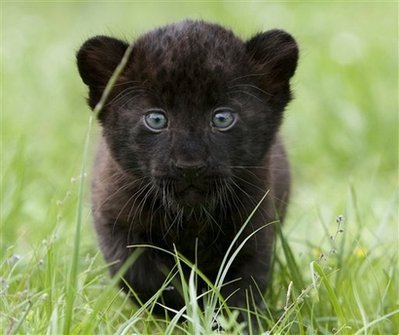
I have (at least) two irrational fears. One is, perhaps, more appropriately described as an 'irrational aversion', and comes upon me whenever I am in our current bathroom, and the other is a complete, must-get-away-now-not-sure-if-I-can-breathe-anymore mindless terror, and comes upon me whenever I am in the dark and near fields. This latter irrational fear is the fear of being attacked and eaten by a wild panther whilst walking or cycling home at night. I live in East Anglia.

I think this admittedly mad fear is based on a story my parents told me many, many years ago. When I was a kid we would occasionally all cycle together from the small hamlet we lived in to the small village nearby, which had in comparison a cornucopia of amenities, such as a shop from which a Sunday newspaper could be obtained. We would often return the 'back' way, which involved slightly narrower, more-winding country roads than the 'normal' way, and went past a couple of farms. This route led past a very old, wooden railway carriage (what it was doing in the middle of a field I have never been entirely sure...), and then round a couple of bends that were lined with trees and had relatively deep ditches on either side - at least to my childhood eyes. When we reached this corner (which I guess was far enough along the route that my brothers and I would probably be getting bored) my parents would tell us to sing and ring our bells so as to make sure that the puma who lived there didn't jump up in alarm at our coming past and eat us. Because this, my parents said, was Puma Corner.

I think, from what I've managed to glean from my parents since, that this was based on a story told by one of their friends, who had been walking home after a night in the pub, and swore blind the next day that he had seen some sort of big cat in the fields. Whether his was an apparition brought on by too much of the local ale, or whether he misidentified some innocent muntjack deer as a wild cat, the result was the same - even when I was old enough to cycle 'the back way' on my own, I would always sing nervously when cycling round Puma Corner - although I did often internally question whether such singing might actually give the puma good cause to decide to eat me, if he did exist.

At some point, this odd habit, fuelled by an overactive imagination, led me to dash inside as soon as dusk fell whenever I was sitting in the garden alone, checking over my shoulder as I did so and slamming the door behind me - and between me and the imaginary Big Cat on my heels. I think I then read, or heard on the television, that the 'expert advice' on what to do if you met a big cat or other type of predator, was not to run - because then they'd think you were a nice juicy gazelle, or something - but to stare them right in the eye and walk away slowly. So I shifted my dash inside into a very determined, slow walk, just to make sure I didn't look like dinner to the hungry big cats prowling the byways of Suffolk. (For some reason it never occurred to me, given that our garden overlooked a field of horses, that I would probably not be the first choice on the panther's menu a la carte). 

I then proceeded to live in a city for three years, where, I reasoned, the scariest thing you might encounter was an urbanised fox, as someone would surely notice a bally great cat prowling around, but I have since moved into accommodation a little way outside a large town that hardly warrants the appellation of 'city', and which is reached by an admittedly scenic cycle path with a broad view of fields and, at night, the stars. Just the kind of idyllic place I would choose to live if I was a big cat wild in England, especially with the meals on wheels coming past like clockwork every evening...

Most of the time, of course, the 'puma fear' is nothing more than a niggling thought at the back of my mind that I know to be irrational, and the greatest effect it has on my behaviour is to lead me to avoid walking too close to the bushes (because, obviously, pumas hide in bushes, and because, obviously, they wouldn't jump out on me if I was an extra metre away -- too much effort for a relatively small portion of meat). However, there are inevitably times when I'm walking home having had a few drinks, and at that point,  I generally find a big "access denied" sticker across the door to my reserves of rationality and sensibleness. At this point, I run down that path as fast as my feet will carry me. Sod having a staring contest with a panther.

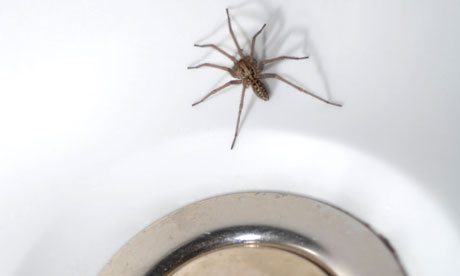
My other irrational fear, which, as I said, is more of an aversion than actual fear, is of spiders.  It annoys me because it's both terribly clichéd, and also something that I haven't always had - when I was younger, I would often be the only girl left in a rapidly-vacated room on a school trip, shrugging my shoulders and looking for a glass and a piece of paper with which to move the apparently deeply offensive money spider crawling across the wall. For some reason, it seems to have started at around the same time as I got married. Is it some deep-seated evolutionary instinct? Perhaps to increase Mr S's sense of my need to be protected because I cannot apparently deal with something as un-threatening as a spider? The explanation could be more quotidian than that - shortly after getting married I moved into an ultra-modern home for the first time. Spiders make a much starker contrast against a bright white wall in a shiny new flat than they do crawling in and out of the cracks in the beams in an old cottage. They look out of place, and are instantly noticeable, and it's just a bit uncomfortable having an arachnid watching you shower. I always suspect this particularly large one in our bathroom of plotting heinous tricks to play on me - like climbing up my pyjama leg when I stumble into 'his' room in the middle of the night.
Mine is definitely bigger than this one. But just look at it. It's
clearly planning revenge for all the spiders you ever
 unwittingly washed down the plughole.
So, those are my irrational fears: one, of something that certainly could eat me if it wanted to, but almost certainly will never be in close enough proximity to me to do so, and two, of something that is often in my vicinity, but certainly can't cause me any harm. So, in response to my revealing how much of a wimp I am (and in what very strange ways I manage to be one) - what are your irrational fears?

PS: No links to articles establishing the existence either of big cats or poisonous spiders in East Anglia. Please.

Tuesday, 30 April 2013

The Randomness of Consciousness

Perhaps I was deluding myself a little when I said in a previous post that I wasn't much one for commenting on current affairs. Earlier this morning, I came across a post on facebook arguing against same-sex marriage. A number of the commenters stated that they "didn't hate gay people", but that they thought that marriage should have nothing to do with non-heterosexual relationships. I chewed my lip for a few minutes, knowing that if I posted a comment, given that this link came from a page openly against same-sex marriage, I would probably spend the next several hours anxiously awaiting responses that would evidently be hostile. But I also felt that it would be wrong to stay quiet. Even if I could never convince anyone to change their viewpoint, I felt it was important to question the reasoning that it was okay to deny to one group of people a privilege allowed to others.

This got me thinking, in turn, about my own wider ethical viewpoint, which is something that's been on my mind a lot over the last couple of weeks. I think that at the very basis of how I think about such things is my long-held sense of the randomness of consciousness.

I'm well aware that 'the randomness of consciousness' sounds like the sort of elliptical phrase that an early twentieth-century philosopher might coin, to the frustration of twenty-first century students everywhere, so let me elaborate. I vividly remember a moment, when I was about seven years old, when I was standing at a sink next to another girl at school, and I looked in the mirror and wondered what it would be like to look up into the mirror and see not my face, but hers. What would it be like to exist in another person's head? 

For a while after that, I chewed the issue over in my head, sometimes even wishing that I could escape the shackles of the body and mind that 'I' existed in and to live life as someone else. It seemed to me, in a way, immensely limiting that I should only ever know what it was like to be 'me'.

Lately, this has transformed into a general sense of how very unlikely it is that I should be experiencing life as the individual that I am. It is completely by chance that I happened to be born in England, that I find myself attracted to people of the opposite sex rather than the same, that I incidentally identify as the gender which lines up with my physical sex, that I had the fortune (perhaps!) to be born with a fairly high degree of intelligence, that my skin by chance is of a pale complexion, that I happen to have a fairly healthy body, that I ended up being born to parents with reasonably steady incomes. All these things are the case, and I cannot change them - but I feel strongly that the fact that I am who I am today, living the life I live in the conditions I live it in, is entirely due to chance. 

Therefore, when it comes to intensely debated ethical issues, I've tried not simply to wonder 'how does this affect me?' but also to ask 'how would I feel if I was one of the people involved in this'? Not simply in a straightforward 'putting myself in their shoes' sense, but also because of my above sense that I could just as easily have been born into their circumstances as they could have been into mine. A human being does not choose their parents, their place of birth, their IQ, their inherited socio-economic status, the colour of their skin, or their sexual alignment. I'm not being completely deterministic about this - people can obviously move beyond the limits into which they are initially born in some ways, for example with regards to socio-economic status - but often, the things for which people are persecuted in this day and age (their gender, their sexuality, their nationality) are those which they had absolutely no part in deciding.

This leads on to the other key tenet by which I try to figure out whether something is ethically "good" or "bad". This is that a human being should have the freedom to pursue their own happiness insofar as it does not impair the happiness of others. I've often seen this referred to as ethical humanism. To this I would also add the caveat that it is my belief that human beings have a duty to endeavour to aid the happiness of others, insofar as they are able without impairing their own. (I know I'm probably mixing my Kant with my Mill at this point...)


So, those are the two categories by which I judge an ethical problem. The first is, if the ethical problem is related to a part of someone's identity that is completely chance-dictated (such as race or sexuality), then I would consider what my emotional reaction to the two sides of the argument (pro/anti-same-sex marriage) would be if the issue affected me. The second is - how would a given issue affect the happiness of the people involved? So, with same-sex marriage, homosexual people who want to be married obviously feel strongly that it would increase their happiness to be able to do so. On the other hand, it seems to me that how two people define and demonstrate a personal relationship has no impact on my own happiness, save, perhaps, to increase it by seeing them fulfilling their own.

And that, I suppose, is how I try to live my life, and why I sometimes feel the need to wade into arguments on the internet that will just leave me shaking with sadness and rage. I do not always succeed in living up to my own ideal, but it seems to me that human beings should try to follow a rule of kindness in their interactions with people - even those who are strangers, or those they will never meet. Essentially, because of the (probably rather incoherent!) things I feel about the 'randomness of consciousness', I think that one should always endeavour to 'treat thy neighbour as thyself' - because all that separates you from your neighbour is the roll of a dice.

Monday, 22 April 2013

Snarking History - An Introduction

One of my happiest blog discoveries over the past year has been stumbling across the "Snark Squad". The raison d'etre of this blog is to provide humorously 'snarky' recap-reviews of a variety of TV shows and books. I first came to them through their painfully-funny-do-not-read-on-public-transport recaps of Fifty Shades of Grey. I thanked my lucky stars at discovering them, because it meant that I could find out what all the fuss was about without having to actually read the books. And, if their recaps are anything to go by, I had a lucky escape.

Their FSoG 'snarks' are not the friendliest review EL James has ever received, but something I love about their other recaps is that, by and large, they come from a place of love - but a place of love that recognises that, for all his awesomeness, writers such as Joss Wheedon can sometimes be just a little bit ridiculous (they do Buffy and Angel recaps as a regular feature). Such an approach is the inspiration for the series of posts that I anticipate writing over time on this blog, in between other updates. I intend to 'snark' history.

As an aspirant scholar, for the vast majority of the time I take history very seriously indeed. To me - though I am sure it is to others - the question of what people in the early modern period thought about mountains (my thesis topic) is not a trivial one. I think that understanding the past in general is a laudable and important goal, and that it is a great honour to have been given, as I have, the time and freedom to delve into the richness of past human experience. History, to me, is far more than the dramatic voiceovers of Simon Schama or the silly clothes of The Tudors. But. But. Sometimes the things that people in the past did, said, or thought, can seem just a little ridiculous to the modern eye. Sometimes it can be very difficult to resist the urge to burst out laughing in the rare books room of the Cambridge University Library. So these posts are to be an outlet, for sharing these amusing and bemusing discoveries with you all.

Of course, it is the weird stuff that can make history really interesting, and ideas that seem laughable to the modern mind can reveal, once scrutinised, a host of beliefs and understandings of the world that tell us a great deal about how different the human experience once was. So, I also hope to use my 'snark' posts not just to recount the apparently wacky things that I come across, but also to start to unravel them, and perhaps understand them a bit.


Finally, just to get you intrigued for the first 'snarking history' post - the reason I have been spurred to start this series is because, in a meeting with my supervisor this morning about the things I had discovered recently, I uttered both the term "mountain-like scrotum" and the Latin phrase, "penis terrae", i.e., the 'penis of the Earth'. And if that sort of thing doesn't require some gentle snarking, I just don't know what does. 

Monday, 8 April 2013

A case study in the (very) contemporary history of emotions

I'm not usually a commenting-on-current-affairs-kind-of-gal, at least not in a blogging sense (I may get heartily opinionated about things I know precious little about on Facebook comment threads, though). This is mainly because, largely, current affairs contentedly pass me by whilst I'm buried amidst a pile of early modern printed books. However, not even I could have missed the news, and the ensuing social media explosion, announcing that Margaret Thatcher, Prime Minister from 1979 to 1990, died today. 

Now, I don't have any particularly vitriolic opinions on the woman myself. I studied her for A Level history and came to the conclusion that she made a lot of different decisions, some with good results, others with bad - and some whose long-term effects are still not entirely clear to us. As (if I had to declare any form of political allegiance) I would probably define myself as a socialist of some form, I disagree with a lot of the ideology behind the decisions she made whilst in power, but I have no especially strong feelings with regards to her.

I've found the discourses surrounding her death, however, really quite fascinating in terms of how it intersects with my current study which, theoretically - it is on early modern scholarly debates about mountains - is as far removed from the reaction to the death of a twentieth century politician as possible. However, many of the scholarly texts I'm currently reading (dating from between 1680 and 1700) often begin by declaring the ways in which the emotional reactions of their opponents are inappropriate; anger, passion, and temper, are all decried as 'unscholarly', even whilst those making such accusations give in to the temptation of such influences in their own contributions to the debate.

I have noticed many people - friends on Facebook and strangers on Twitter - declaring that the reactions that some have had to Thatcher's death are 'inappropriate'. Those criticising her should, some say, remember the old adage of not speaking ill of the dead, whilst those expressing happiness or joy at her departure from this mortal coil are seen as disrespectful, even disgusting. These two criticisms are obviously slightly different - I feel that this article says everything I feel is pertinent to the former (Thatcher was a public figure who divided opinion in life: in death public reaction should not be shackled by a refusal to point out the bad elements of her policy, or barred from providing a variety of views) - but the latter is, I think, a more complex issue than it seems at first sight.


I think that there certainly is something odd about a young person of, say, my generation and family background (as far as I know I do not have any immediate family members affected by Thatcher's policies during her time in power), feeling and expressing joy or satisfaction at the death of an old woman who is really by this point more a part of modern history rather than an active political player. I might disagree with what she did but it has long happened, and although perhaps her economic policies might be pointed at by some as the cause of the current recession, she never directly impacted upon my life. Politicians (or political activists) from relatively well-off families who were likewise relatively unaffected by her during her lifetime, but see her death as an opportunity to 'gloat' simply because a significant figure from the Tory past has died I also find difficult to understand. But castigating all who genuinely feel, and honestly express, relief and a sense of schadenfreude at the passing of someone who had a negative impact on the lives of thousands of people, disregards the very real impact that the actions of politicians can have on the lives of everyday people.

I say this for two reasons. The first is that I know, in a much smaller-scale way, how it feels to be negatively affected by what is nominally the decision of a single politician. If something you care about - your work, your freedom, your ability to live - is under threat or taken away, it is human nature to try to find a target for all the anger and hurt and hate that such a change causes. When governments decide things that directly affect you, you can feel completely powerless, a pawn tumbled around by a faceless, conglomerate entity. Easier by far to pick a face, a name, to impotently rage against. It is easy to look at the facts of history and say: Margaret Thatcher damaged the lives of many. But how would you, or I, feel if ours had been one of the lives damaged?

My second reason is that I always try to empathise with the emotions or passions of the historical figures with whom I'm working. To a modern eye, the debates which I'm studying seem faintly ludicrous, and it seems excessive that those involved in them should become so consumed by their arguments that they insulted one another in published works across the years and even decades. But for them, at the time, these debates  questioned the very veracity of the Bible itself - and thus, in turn, the veracity of the doctrine of salvation. For these men it was an issue of life or death. Of course they were angry. For the miners whose mines closed down under Thatcher, what happened must have struck them with a similar force. Whatever the wider economic arguments for what happened, as far as such individuals were concerned, those closures had the potential to ruin their lives and those of their families. Of course they hated Thatcher, the face of that policy, and continued to hate her throughout the years. Human beings, whether in 1690 or 1990, have always been emotional creatures.

In an ideal world, would there be people such as the one my history teacher told us about during our Thatcher classes, a man he knew who kept a bottle of champagne in the fridge for the day Thatcher died? Of course not. But in an ideal world, there would also never be social injustices. Thatcher was a politician, and she made hard decisions which had benefits for some, and disastrous results for others. Some today will grieve her death, and laud her memory, but others will not. Those who are truly joyful today will be those for whom she symbolised a time of real suffering in their lives. Criticising their emotions as improper, invalid, or even immoral is to deny how much power politicians can wield, for good or ill, in the lives of the people they serve. And just as I think that historians should try to bear in mind that the passions of the past were once real and vitally important to those who felt them, so too do I feel that this is something that modern citizens would do well not to forget.


Monday, 1 April 2013

Rapunzel, Rapunzel, let down your hair...

Do you know what it is like to remember something from long ago, but to be unsure whether what you recall is truly a memory, or a story that your mind made up to fill in a gap? So that is why I say that I think I remember, one Christmas evening when I was quite small - perhaps seven or eight - my Dad saying that he had forgotten a present, and taking me upstairs. I think I remember him opening his bottom drawer, and handing me a book, telling me that he had been saving it for a while until he thought I was old enough to have it. That book was The Illustrated Treasury of the Brothers Grimm.

Anyone reading this has probably figured out by now that I have something of a 'thing' for books and reading, so I of course devoured the book as soon as it was in my hands. The first story, "The Frog Prince", and the brightly-coloured illustration of it on the cover, left me sniffing slightly at the thought that I could ever have been too young for this book, but it soon became apparent that beneath the fairy-tale cover there waited for me stories that were truly dark, with illustrations that were, to an eight-year-old (and even perhaps to a twenty-one-year-old!) a little chilling. With two older brothers and no sisters, there was no Disney Cinderella for me - only the Brothers Grimm version of the story, in which the ugly sisters cut off their toes in order to try to fit Cinderella's glass slipper.

 Some of the more disconcerting illustrations from The Brother's Grimm.
I am sure my parents must have read some of the stories aloud to me, or perhaps I did to them (I fear from an early age I had a strong sense of drama when it came to reading aloud, and once exasperated my mother so much by correcting her tone and emphasis in reading the dialogue in the Narnia series that she suggested I take over), because I cannot shake the remembrance of spoken rhythm when I think of the story of "Rapunzel", in which the witch, and later the prince, sang to her window - "Rapunzel, Rapunzel, let down your long hair..." But when I look at the book open beside me now, I realise that memory has played its tricks on me; in my edition the word "long" is absent. But, of course, Rapunzel's hair was long - so long that it reached the bottom of the tower in which she was imprisoned.

For mostly as long as I can remember I have had long hair - not as long as Rapunzel's, perhaps, but longer than the norm, I think. I have painful memories of my mother brushing it (Loreal no-more-knots for kids was used in copious amounts in our household), and also a bemusing one of my eldest brother, not long after he'd first got a girlfriend for the first time, showing me how to brush it out painlessly starting at the bottom and working your way up - Mum had always just determinedly brushed from the top down, dragging the knots with her.  And I realised that my long hair is something I feel surprisingly strongly about, when I read this blog post, about a woman donating her long hair to a charity for making real-hair wigs for cancer victims.

In it, she speaks about the buzz that she got from doing something that she felt would make such a meaningful difference for people in need, and I toyed for a moment with the vision of doing such a thing - of giving away my hair, of proudly wearing a buzz cut and knowing that, perhaps, I had made someone suffering something that I cannot imagine feel just a tiny bit better. But I fear that I am not, perhaps, that selfless. 

The problem is - and this will probably seem ridiculous to people who are perfectly happy with short hair, or who have long hair and would lose no sleep over parting with it - that I have looked into the mirror and seen long hair framing my face for some many years that I am not sure I can imagine me without it. When I went on a month's expedition to China (which included trekking in 40 degrees heat and extremely high humidity), I actively decided that I did not want to cut my hair, though I knew it would be a bother to keep clean and brushed (not to mention out of my eyes - goodness, I hate the wind sometimes!). My logic was this: even when I had not showered for a week, even when I was wearing hiking boots, trekking shorts, and a t-shirt dripping in sweat, I could brush my hair, and that would be my luxury. In the last four years I have had it cut to shoulder-height once, because a man who had hurt me badly had praised its length. I wanted to change, and wanted to be a different person from the one he had made a fool of: cutting my hair, for me, was the biggest change I could think of.

Since then, my hair has grown out, and when I look at photos of my short (to me!) haired phase I feel a bit perplexed, because I do not look like myself. I still threaten to Mr S that I will cut it when he makes a habit of catching it in his cuffs or leaning on it, but I would never really do it, and it would not be the fact that I know he likes my long hair that would prevent me. I'm not sure if it's as simple as saying that my long hair makes me feel 'feminine', or that I want to be a princess like Rapunzel, but, perhaps it could be as simple as saying that I like it. I like the feeling of running really fast against the wind and feeling it stream behind me. I like tying it up in a bun, still damp, and letting it down hours later to see a muddle of curls. I like fiddling with it, though I have grown out of the habit of chewing on it, as I did when I was at the age of first reading The Brothers Grimm. My long hair is free, but I value it more jealously than I do anything else that I might be able to donate - more than coins, more than blood. So, much as I would like to be able to do something as amazing as the blogger linked to above, I do not think I could - because it would mean giving away part of myself.

Of course, even Rapunzel, the epitome of the long-haired heroine, lost her hair to the witch's scheming scissors. But, so long as the worst threat to it continues to be my husband's elbows at the table, my messy, not-exactly-blonde-but-not-exactly-brown, but above all long locks, will remain exactly where they are. At the very least they might come in handy if I find myself locked in a very tall tower.